Impact on legislation
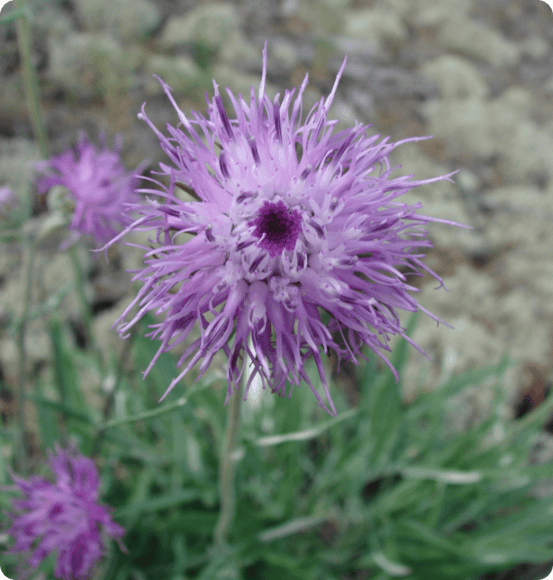
Long-term species survival requires systemic change in how land and forests are managed. This action focuses on embedding Jurinea cyanoides conservation priorities directly into official land-use and forestry plans, establishing cross-border policy coordination, and expanding the protected area network across Czechia and Germany. To secure these lasting impacts, the project will target to deliver 13 updated site management plans across both countries, establish 1 international rescue program with tailored national implementation frameworks, designate 2 new protected areas, and approve formal boundary updates for existing sites.
Working group establishment
Aim: To establish a permanent international working group uniting conservation authorities, experts and landowners to harmonize policy documents and oversee long-term species recovery.
- Form an expert working group comprising representatives of nature conservation authorities (Regional Offices, NCA), project partners, landowners, and external specialists.
- Engage stakeholders across regions, including authorities from Saxony-Anhalt and other German federal states where Jurinea cyanoides occurs, inviting legal or policy advisors as needed.
- Analyze and align management documentation with project findings to ensure evidence-based conservation policy.
- Maintain working group operations post-LIFE project to guarantee long-term coordination and governance.
Designation of new protected areas and administrative changes
Aim: To secure formal legal protection for reintroduced populations and establish new protected areas to guarantee the long-term conservation of Jurinea cyanoides.
- Update legal protection status for target sites, integrating Jurinea cyanoides as an official target species in Standard Data Forms (SDF) for Natura 2000 sites (SCI) in Germany and Czechia.
- Incorporate species conservation requirements into new management plans for all reintroduced and expanded site populations.
- Adjust protected area boundaries at the Tišice site (CZ) by establishing optimal national-level protection within the project timeframe.
- Designate two new protected areas in Germany (Weinberg-Ost and Mühlberg) as natural monuments following management interventions.
Management plans
Aim: To establish strategic transboundary and local conservation frameworks by developing an International Rescue Programme, updating site-specific management plans and negotiating forest management plan revisions to secure the long-term survival of J. cyanoides.
- Develop an International Rescue Programme for J. cyanoides integrating project data on species protection, habitat management, reintroduction, pollinator support, and long-term monitoring across CZ, DE and UA.
- Prepare national strategic conservation documents.
- Negotiate with forest owners to revise commercial forest business plans, prioritizing prospective sites and eliminating harmful practices such as planting invasive Robinia pseudoacacia.
- Create new or revise existing 10-year site management plans for all target locations in close cooperation with nature conservation authorities to incorporate project findings.
- Optimize existing Natura 2000 management plans in Saxony-Anhalt (DE) in collaboration with responsible state offices and draft new management plans for the two newly designated nature monuments (Weinberg-Ost and Mühlberg).
Project activity achievements
The activities haven't started yet.
Activity leader

Project partners
Financing
Co-funded by the European Union. Views and opinions expressed are however those of the author(s) only and do not necessarily reflect those of the European Union or CINEA. Neither the European Union nor the granting authority can be held responsible for them.